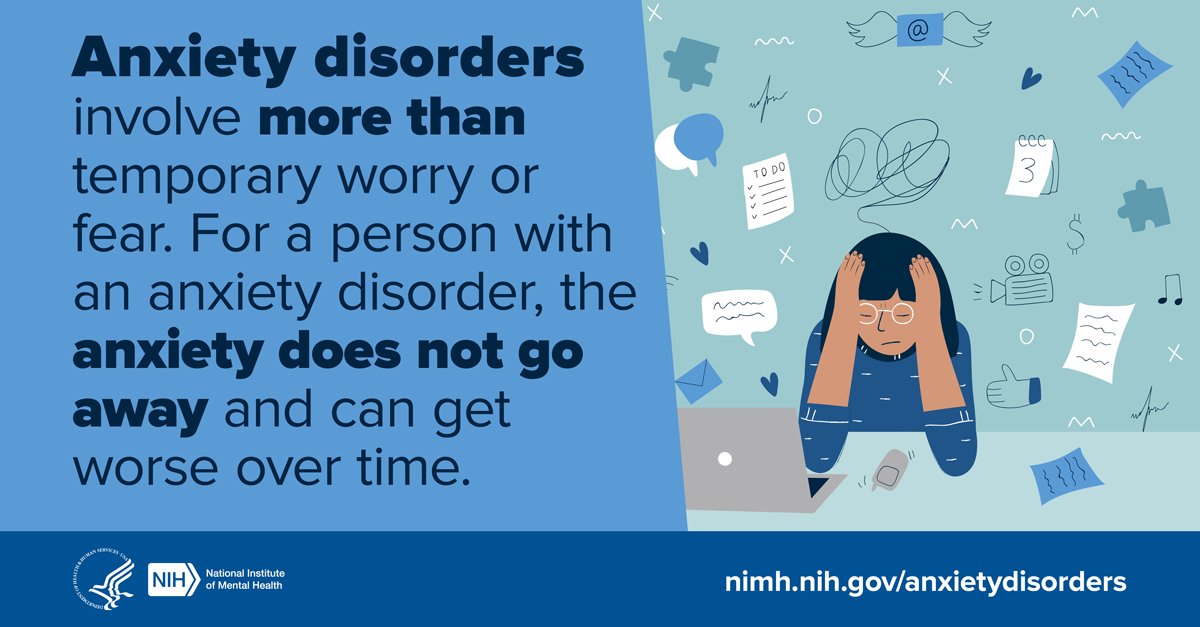
MENTALHEALTH.INFOLABMED.COM - Feeling anxious is a normal and often inevitable part of life, as many individuals regularly worry about common concerns like health, money, school, work, or family matters. However, anxiety disorders represent a far more serious and persistent condition than occasional worry or fear.
For those affected by these debilitating disorders, anxiety does not simply dissipate; instead, it becomes a pervasive presence across numerous situations and often intensifies significantly over time. There are several distinct types of anxiety disorders, each with unique characteristics that profoundly impact daily living.
Why NIMH Prioritizes Anxiety Disorder Research
The National Institute of Mental Health (NIMH) dedicates substantial resources to studying anxiety disorders due to their widespread prevalence and profound impact on public health. Approximately one-third of U.S. adolescents and adults will experience an anxiety disorder at some juncture in their lives, highlighting the critical need for comprehensive understanding and effective interventions.
Symptoms of anxiety disorders can severely disrupt daily life and interfere with routine activities, significantly hindering job performance, academic achievement, and personal relationships. In severe instances, individuals might experience intense fear in commonplace situations, actively avoid social interactions, or even become unable or unwilling to leave their homes.
NIMH's Comprehensive Research Approach
NIMH actively conducts and funds pioneering research aimed at unraveling the complex environmental and genetic factors that contribute to the development of anxiety disorders. These crucial investigations include comparative studies examining brain development and biological differences between individuals with and without anxiety disorders.
Furthermore, NIMH-supported research rigorously investigates family dynamics and various other environmental elements that may influence the risk for anxiety disorders across all age groups, from infants and children to adolescents and adults. This holistic approach seeks to identify early indicators and protective factors.
Examining Life Events and Youth Vulnerabilities
A significant portion of NIMH-supported research focuses on the incidence rates and symptomatic expressions of anxiety disorders following major life events, such as pregnancy, trauma, or serious illness. This vital work helps understand how significant transitions can trigger or exacerbate anxiety conditions.
Particular attention is given to identifying predictors and symptoms of anxiety disorders among youth, exploring critical periods like the college transition and the impact of social media use. Understanding these specific vulnerabilities is crucial for developing targeted prevention and early intervention strategies for younger populations.
Advancing Interventions and Understanding Overlap
Additionally, NIMH robustly supports research into novel interventions and treatments tailored for the diverse types of anxiety disorders. These studies are essential for improving existing therapies and developing more effective, personalized care options for patients.
The Institute also backs studies that delve into the complex overlap of anxiety with other mental health conditions, such as depression and eating disorders, recognizing the frequent comorbidity of these challenges. Moreover, research explores how anxiety symptoms, their severity, and treatment needs evolve across the lifespan, adapting care to different age demographics.
Explore Clinical Trials for Anxiety Disorders
Clinical trials represent vital research studies designed to discover new and improved methods for preventing, detecting, or treating various diseases and conditions. Participating in these trials can offer access to cutting-edge treatments and contribute significantly to scientific knowledge.
To learn more about clinical trials related to anxiety disorders or to find a suitable study, several key resources are available. The "Clinical Trials – Information for Participants" resource provides answers to common questions, including motivations for participation and what to expect during a trial.
For a comprehensive list of current studies on anxiety disorders funded by the National Institutes of Health (NIH) and being conducted nationwide, individuals can visit Clinicaltrials.gov. Additionally, specific lists are provided for studies actively seeking participants on the NIH campus in Bethesda, MD.
These include dedicated "NIMH Anxiety Disorders Studies for Adults" and "NIMH Anxiety Disorders Studies for Children," offering opportunities for different age groups to engage directly with groundbreaking research. Exploring these avenues can be a profound step toward both personal healing and broader scientific advancement.
Where to Learn More and Find Support
The NIMH offers a wealth of information and outreach materials to help individuals and families understand anxiety disorders better. Digital brochures and fact sheets, available for free in print and online, provide detailed insights into signs, symptoms, and various treatment options.
Stay informed about the latest breakthroughs by exploring NIMH news regarding anxiety disorders, which includes press releases and highlights on recent research findings. Furthermore, access valuable data concerning the prevalence and treatment statistics of anxiety disorders within the United States.
For immediate and accessible information, social media graphics, videos, and various resources about anxiety disorders are regularly shared across NIMH platforms. These materials are designed to educate the public and reduce stigma associated with mental health conditions.
If you or someone you know needs help, learn how to find support and locate mental health services in your local area by visiting the Substance Abuse and Mental Health Services Administration website. This invaluable resource connects individuals with vital care and assistance.
Crucially, if you or someone you know is struggling with thoughts of suicide or experiencing a mental health crisis, please reach out immediately. Call or text the 988 Suicide & Crisis Lifeline at 988, or chat online at 988lifeline.org for confidential support.
In any life-threatening situation where immediate danger is present, do not hesitate to call 911 for emergency assistance. Additionally, MedlinePlus, curated by the National Library of Medicine, offers extensive information, journal articles, and other reliable resources about anxiety disorders.
Frequently Asked Questions (FAQ)
What are anxiety disorders and how do they differ from normal anxiety?
While feeling anxious is a normal part of life, anxiety disorders involve more than occasional worry or fear. For individuals with these disorders, anxiety does not go away, is felt in many situations, and can worsen over time, significantly interfering with daily life, job performance, schoolwork, and relationships.
Why does NIMH conduct research on anxiety disorders?
The National Institute of Mental Health (NIMH) studies anxiety disorders due to their high prevalence and significant impact; about one-third of U.S. adolescents and adults experience an anxiety disorder. NIMH research aims to understand the causes, develop effective treatments, and improve public health outcomes for this critical topic.
What specific areas of research does NIMH focus on regarding anxiety disorders?
NIMH conducts and funds research examining environmental and genetic factors, brain development, and biology related to anxiety disorders across all age groups. Their studies also focus on the impact of major life events, youth vulnerabilities like college transition and social media use, and developing new interventions and treatments, including exploring overlap with other disorders like depression and eating disorders.
How can I find information about clinical trials for anxiety disorders?
You can find information about clinical trials through several resources, including "Clinical Trials – Information for Participants" for general questions. For a list of current studies funded by NIH, visit Clinicaltrials.gov, and for studies specifically on the NIH campus in Bethesda, MD, consult the "NIMH Anxiety Disorders Studies for Adults" and "NIMH Anxiety Disorders Studies for Children" lists.
Where can I access educational materials and find support for anxiety disorders?
NIMH provides digital brochures, fact sheets, news, and social media resources with information on signs, symptoms, and treatment options. You can also find support and locate mental health services in your area through the Substance Abuse and Mental Health Services Administration website and access extensive resources via MedlinePlus from the National Library of Medicine.
What resources are available for someone experiencing a mental health crisis or suicidal thoughts?
If you or someone you know is struggling or having thoughts of suicide, call or text the 988 Suicide & Crisis Lifeline at 988, or chat at 988lifeline.org. In life-threatening situations requiring immediate assistance, always call 911.


